Connection Between Hearing Loss And Sinusitis
Understanding how your ears, nose, and throat work together
This is for informational purposes only. For medical advice or diagnosis, consult a professional.
It might sound like a strange pairing at first, but your ears, nose, and throat are interconnected. When your sinus acts up, your ear often pays the price, occasionally leading to a surprising and frustrating bout of muffled hearing.
Hidden Connection: How Sinusitis Affects Hearing
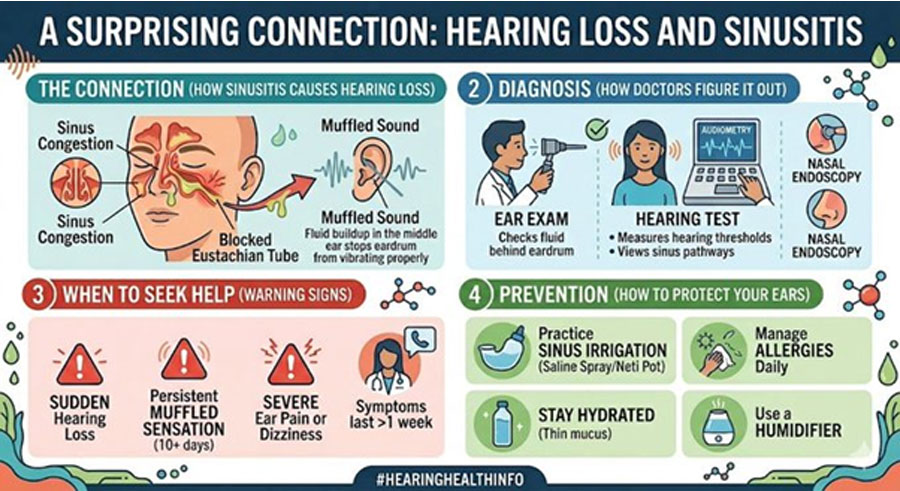
The bridge between your sinus and your ear is a tiny, crucial hallway called the Eustachian tube. This tube runs from the middle ear to the back of your throat, and its main job is to equalize air pressure and drain normal fluids. When you develop sinusitis (inflammation of sinus cavities), your body produces an excess of thick mucus. This inflammation and fluid buildup can easily block the opening of the Eustachian tube.
When the Eustachian tube is blocked, it creates a vacuum-like effect in the middle ear, pulling the eardrum taut or allowing fluid to pool behind it. As the eardrum cannot vibrate freely, sounds become muffled or distorted—a temporary condition known as conductive hearing loss. It often feels like you are underwater or listening through a long tunnel.
How It Is Diagnosed
If you visit a doctor or an Ear, Nose, and Throat (ENT) specialist, they will use a combination of physical exams and specific tests to see how the sinus pressure is impacting your ears.
- Otoscopy & Nasal Endoscopy: The doctor will look inside your ears using an otoscope to check if the eardrum is dull, bulging, or backed by fluid. They may also use a thin, lighted scope (endoscope) to look directly up your nasal passages at the sinus openings.
- Tympanometry: In this quick pressure test, a small probe is placed at the ear canal to alter air pressure, measuring how well your eardrum moves. If it barely moves, it confirms there is fluid or heavy pressure behind it.
- Audiometry (Hearing Tests): If your hearing loss feels significant, a standard pure-tone hearing test can confirm whether it is purely conductive (blocked sound waves) or if there is any nerve involved.
- Imaging (CT scans): For chronic or stubborn sinus issues, a CT scan of sinuses can show exactly which cavities are blocked and if structural issues (like a deviated septum) are compounding the problem.
When to Seek Help
In most cases, sinus-related hearing loss is temporary and clears up as the infection heals. However, you should contact a healthcare professional or an ENT if you experience any of the following symptoms:
- Sudden, profound hearing loss in one or both ears. This can sometimes signal a nerve issue requiring immediate steroid treatment.
- Severe, debilitating ear pain or fluid/pus draining from the ear canal is a sign of a ruptured eardrum.
- Dizziness, vertigo, or a persistent spinning sensation.
- Symptoms or muffled hearing that last longer than 7 to 10 days without improvement.
- A high fever or swelling/redness around eyes.
How to Prevent It
The best way to prevent sinus-related hearing loss is to keep your nasal passages clear and stop sinus pressure from backing up into your ears in the first place.
- Practice Sinus Irrigation: Use a saline nasal spray or a sinus rinse bottle with distilled or boiled water. Use daily during cold and allergy seasons to flush out irritants and thin out thick mucus.
- Manage Allergies: If pollen, dust, or pet dander triggers your sinusitis, stay on top of daily antihistamines or nasal steroid sprays as per doctor recommendation.
- Stay Hydrated: Drinking plenty of water keeps your mucus thin, making it much easier for your sinuses and Eustachian tubes to drain naturally.
- Use a Humidifier: Adding moisture to the air, especially at night or in dry climates, prevents your nasal passages from drying out and swelling shut.
- Avoid Flying with Heavy Congestion: Changes in cabin pressure can painfully lock up a compromised Eustachian tube. If you must fly while congested, use an over-the-counter decongestant spray 30 minutes before take-off and landing. Avoid using these sprays for more than 3 consecutive days to prevent "rebound" congestion.
Home Remedies for Sinus Infection
When a sinus infection backs up into your ears, the goal of home remedies is to thin out mucus blocking your Eustachian tubes and manually encourage those tubes to open up so that the trapped pressure can equalize.
1. Clear the Tubes with Dynamic Pressure Relief
The following physical techniques help open Eustachian tubes to release trapped air and fluid.
- Valsalva Manoeuvre: Take a deep breath, pinch your nose shut, close your mouth, and gently blow out as if you were blowing your nose. Do this very gently as pushing too hard can damage your eardrum.
- Toynbee Manoeuvre: Pinch your nose shut and take a few sips of water, swallowing with your mouth closed. Combination of swallowing water and closed nasal airway creates a pressure change that naturally coaxes Eustachian tubes to open.
- Active Jaw Movement: Chew sugar-free gum, yawn deeply, or swallow repeatedly. The muscle movements in the back of your throat during these actions naturally pull the Eustachian tubes to open.
2. Use Heat and Moisture to Thin Mucus
Thick, sticky mucus acts like glue in your sinus and ear passages. Use heat and moisture to break it down.
- Steam Inhalation: Sit over a bowl of steaming hot water with a towel draped over your head for 10–15 minutes, or take a long, hot, steamy shower. Breathing in the moist air reduces swelling in the nasal passages and thins out mucus.
- Warm Compress: Hold a warm, damp washcloth against your ear, cheekbone, and the side of your neck just below the ear. The localized heat increases blood flow, relaxes surrounding muscles, and helps soothe ear pain.
3. Flush the System
Targeting the nasal side of the blockage directly relieves the pressure building toward your ears.
- Saline Nasal Rinses: Use a squeeze bottle or a neti pot with sterile, distilled, or previously boiled water mixed with saline. Flushing nasal cavities reduces inflammation right at the mouth of the Eustachian tube.
- Elevate Your Head: When resting or sleeping, use an extra pillow. Lying flat allows blood and fluid to pool in your head, significantly worsening sinus and ear pressure.
4. Use Over-the-Counter Aids
While not strictly "home remedies," a few over-the-counter aids can speed up relief when used correctly:
| Remedy Type | How It Helps | Warning |
|---|---|---|
| Oral Decongestant (e.g., Pseudoephedrine) | Constricts swollen blood vessels to open up air and drainage pathways. | Can increase heart rate and blood pressure. Check with a doctor if you have hypertension. |
| Nasal Decongestant Sprays (e.g., Oxymetazoline) | Provides rapid, localized relief from swelling right near Eustachian tubes. | Do not use for more than 3 consecutive days. Longer use causes severe "rebound congestion" that makes blockage worse. |
| Pain Relievers (e.g., Ibuprofen or Acetaminophen) | Reduces inflammation and blocks pain signals. | Always follow dosing instructions. |
When to stop: If you try the Valsalva manoeuvre (gentle blowing) and feel sharp pain, or if you hear a popping sound followed by fluid draining out of your ear canal, stop immediately and consult a doctor. This indicates a middle ear infection or a compromised eardrum.
AudiZone Speech & Hearing Clinic with its pan India presence through 16 branches and a team of over 100 highly qualified audiologists has, to date, successfully treated over 1 lakh patients — including kids and adults — for hearing and speech related issues. AudiZone provides various types of branded hearing aids such as Signia, Phonak, Widex, ReSound, Starkey, and Oticon to patients based on their preference and requirement.